Shuttlecock Guide
How to Evaluate a Yonex AS-30 Alternative for Club Play
Use a fair side-by-side test to evaluate a Yonex AS-30 alternative for flight, feel, durability, batch consistency and club cost.
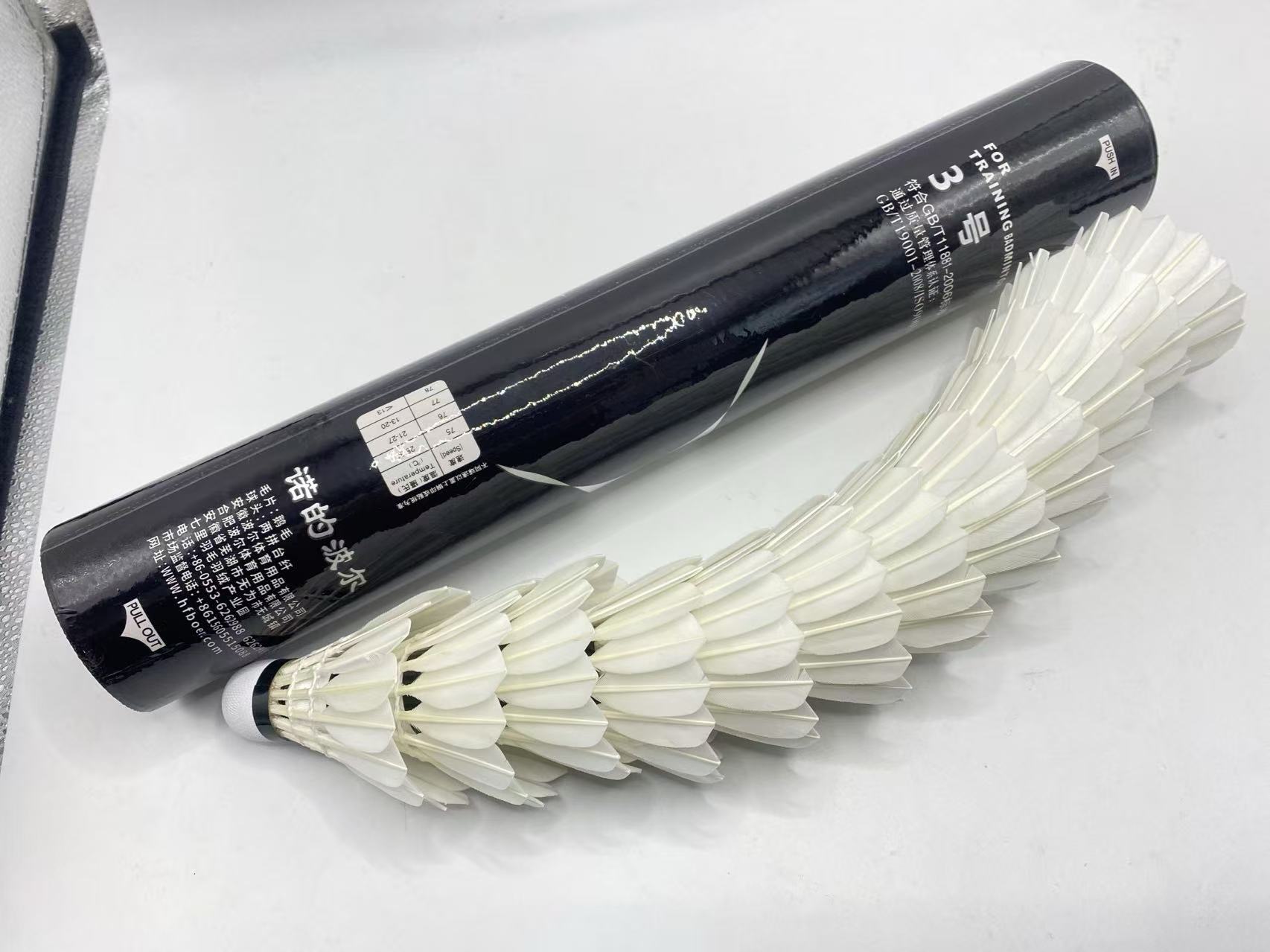
How to Evaluate a Yonex AS-30 Alternative for Club Play
Clubs searching for a Yonex AS-30 alternative are usually not looking for a name change. They want to maintain familiar feather-shuttle flight and feel while controlling recurring cost or improving supply reliability.
No responsible supplier should claim that an alternative is “the same” without a controlled side-by-side test. Materials, speed calibration, storage and batch variation can change performance. The correct approach is to define the qualities your club values, test candidates under identical conditions and compare landed cost per usable session.
*Yonex and AS-30 are trademarks of their respective owner. This article is an independent purchasing framework and does not claim affiliation, authorization or identical specification.*
Define what “alternative” means for your club
Ask players and coaches to rank these criteria:
- flight length and trajectory;
- stability after repeated rallies;
- contact feel and sound;
- feather breakage and usable life;
- consistency between pieces and tubes;
- speed availability;
- landed cost and supply lead time.
Without this definition, buyers often compare only tube price and overlook the reasons players liked the original shuttle.
Choose candidates by use level
Within the supplied BOER range, reasonable test candidates include:
| Candidate | Catalogue position | Why test it | |---|---|---| | BOER No.1 | Event-grade, premium goose sword feather | For stronger players and event preparation | | BOER No.2 | Competition training, three-layer composite cork | For club matches and advanced sessions | | BOER No.3 | Advanced training, preferred goose sword feather | For balanced regular club use | | Star-Moon 100 | Higher-grade duck feather training | For a different cost-performance option |
This is not a claim that any model equals AS-30. It is a shortlist for local evaluation.
Run a blind or semi-blind comparison
If possible, cover or code the tubes so testers focus on performance rather than brand expectations. Use the same speed, hall, session type and storage condition.
Score each sample from 1 to 10 for:
- initial flight stability;
- length consistency;
- impact feel;
- recovery after hard shots;
- visible feather damage;
- usable flight life;
- player acceptance.
Use several pieces from each tube. One unusually good or bad shuttle should not decide the order.
Compare cost per usable hour
The useful comparison is not list price versus factory price. Calculate landed cost, including freight, taxes or clearance where applicable. Then divide by the hours or sessions in which the shuttles remained acceptable.
Cost per usable hour = landed shuttle cost ÷ verified usable court hours
If your club reuses worn shuttles for feeding drills, record that second life separately. Do not count an unstable shuttle as fully usable for match practice.
Check supply risk before switching
A successful sample is only the first step. Ask the supplier to confirm:
- exact feather and cork specification;
- speed marking and seasonal availability;
- packaging quantity;
- sample and bulk order rules;
- batch quality-control process;
- production and shipping timeline;
- process for claims and replacements;
- whether the approved sample can be the order reference.
For the current NDBOER/FeatherTrain catalogue, standard packaging is 12 pieces per tube, bulk MOQ is listed as 100 tubes per model, mixed speeds can be discussed and production lead time is generally 7-15 business days subject to order conditions. Reconfirm every quotation.
Avoid four common switching mistakes
Buying too much after one session
Test across more than one day and player group. Temperature and humidity may affect results.
Comparing different speeds
A faster alternative may appear powerful but be wrong for the hall. Confirm speed first.
Asking for the cheapest equivalent
“Equivalent” is not a specification. Provide target flight, feel, durability, packaging and cost range.
Treating supplier ratings as independent proof
Catalogue ratings are useful for shortlisting, not a substitute for club testing.
Frequently asked questions
What is the best Yonex AS-30 alternative?
There is no universal answer. BOER No.2 and No.3 are logical goose-feather candidates to test for competition training and regular club use, but your local result should decide.
Can a cheaper shuttlecock be more cost-effective?
Yes, if it maintains acceptable flight for enough sessions. It can also be less cost-effective if it becomes unstable early. Use landed cost per usable session.
Should we switch every training group at once?
No. Pilot the candidate with one or two groups, collect structured feedback, and expand only after supply and batch consistency are confirmed.
Test before replacing
Request a mixed evaluation pack, include the speed currently used by your club and run a documented comparison. Then submit the results through request samples for a refined recommendation.
Need help choosing the right shuttlecock?
For model selection, sample testing, club supply, wholesale or OEM enquiries, contact our shuttlecock specialist directly.
WhatsApp: +86 199 5512 6120
BR-SHUTTLECOCK
Contact Expert
BOER No. 1 Competition Grade Goose Knife Feather Badminton Shuttlecock
Loading contacts…