Shuttlecock Guide
Shuttlecock Cork Heads Explained: Full Natural, Three-Layer and Two-Layer Construction
Understand full natural cork, three-layer composite and two-layer fiber cork shuttlecock heads and how each affects feel, rebound and cost.
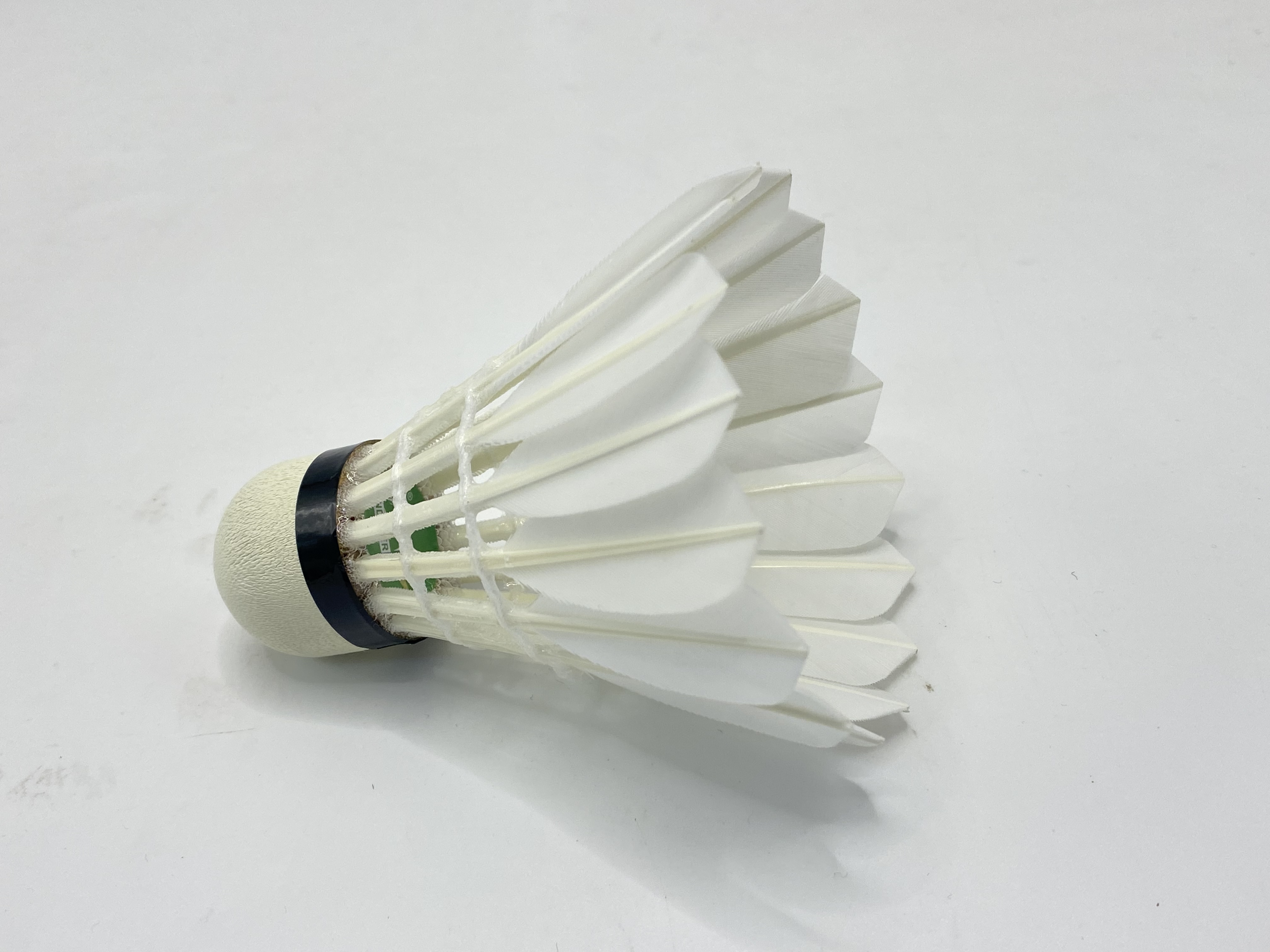
Shuttlecock Cork Heads Explained: Full Natural, Three-Layer and Two-Layer Construction
The cork head is the part of a shuttlecock that players strike, but its job is larger than receiving impact. It influences rebound, contact feel, weight distribution, sound, deformation and the way impact force reaches the feather stems. That is why two shuttlecocks made with similar feathers can feel very different.
Terms such as full natural cork, three-layer composite cork and double-layer fiber cork describe construction families. They are useful for screening products, but quality still depends on cork density, layer bonding, dimensions, feather insertion and final assembly.
Full natural cork head
A full natural cork head is made primarily from natural cork rather than a layered combination of natural cork, synthetic material or fiber board. Buyers often associate it with premium feel and rebound.
Potential advantages include a clean response and a premium product position. Possible trade-offs include higher material cost and the need for consistent cork density. “Full natural cork” should not be accepted as a complete specification: buyers should ask about grade, density consistency, cover material and sample performance.
Three-layer composite cork head
A three-layer head combines different layers to balance feel, resilience, stability and cost. In the current BOER catalogue, No.2 uses a three-layer composite cork head, while No.3 may use a double- or three-layer composite head depending on the confirmed specification.
This structure is commonly relevant to competition training and higher-level club use. The important issue is not the number three by itself, but whether the layers are consistent, well bonded and matched to the feather grade.
Double-layer composite or fiber cork head
Two-layer heads are widely used for club, school and amateur training products. A natural-cork striking layer may be combined with a composite or fiber base to control cost while maintaining acceptable contact response.
BOER No.500, No.501 and No.502 are listed with double-layer composite fiber cork heads. Star-Moon 100 and Star-Moon 300 use the same broad construction family in the supplied catalogue.
How the structures compare
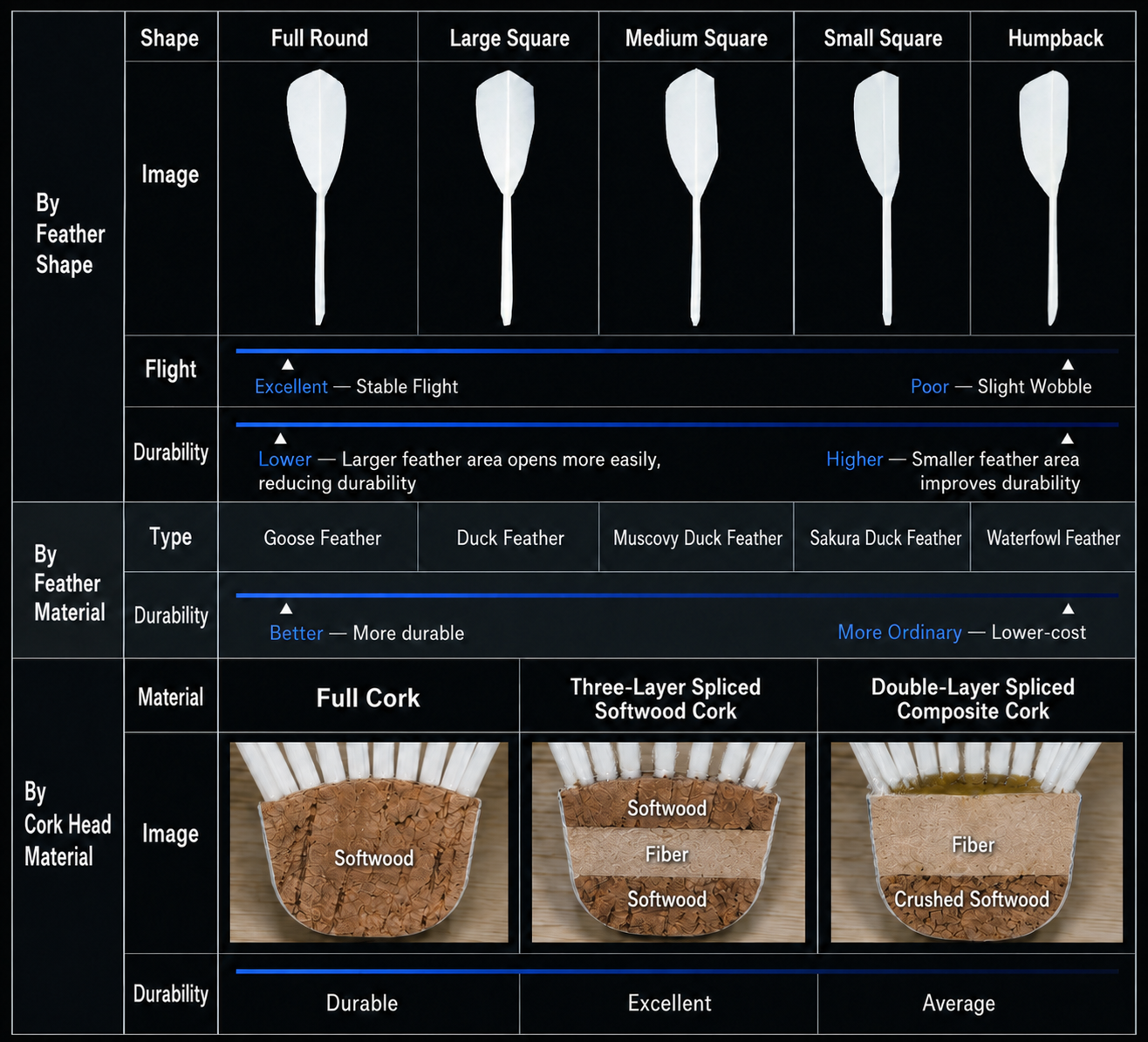
*Illustrative material comparison supplied by the manufacturer. Actual flight, durability and feel also depend on feather grading, cork density, assembly, speed and playing conditions.*
| Construction | Typical objective | Common application | Buyer check | |---|---|---|---| | Full natural cork | Premium feel and rebound | High-grade training or competition products | Confirm cork grade and density consistency | | Three-layer composite | Balance feel, stability and material control | Competition and advanced training | Inspect layer bonding and sample consistency | | Double-layer composite | Balanced club performance and cost | Regular club and coaching sessions | Compare feel after repeated impact | | Double-layer fiber cork | Practical cost control | Schools, amateur and high-volume training | Check deformation, bonding and flight life |
These are market-level tendencies. A well-made layered head can be more useful than an inconsistent natural-cork head.
Why head and feather must be evaluated together
The cork head is not an isolated component. A heavier or softer head changes the sensation at contact. Feather stiffness and skirt geometry change aerodynamic response. Threading and adhesive influence how the assembly holds its shape.
For OEM orders, specify the target experience rather than only naming a material:
- player level and session type;
- desired contact feel;
- target durability and flight standard;
- required speed range;
- feather type and grade;
- packaging and price position.
This gives the supplier a better brief than “use three-layer cork.”
How to inspect a shuttlecock head sample
- Compare head diameter, roundness and cover finish across several pieces.
- Check whether the feather stems are inserted evenly.
- Look for gaps, soft areas or visible layer separation.
- Strike several shuttles with the same player and racket.
- Record rebound, sound, feel and deformation.
- Recheck flight after repeated impact.
For a purchasing test, compare complete shuttlecocks. Cutting one sample open can show internal construction, but it cannot predict flight by itself.
Model-position examples
| Model | Listed head | Intended use | |---|---|---| | BOER No.1 | Full natural cork head | Elite training and community competition | | BOER No.2 | Three-layer composite cork head | Club competition and advanced training | | BOER No.3 | Double- or three-layer composite cork head | Regular club, school and coaching use | | BOER No.500/501/502 | Double-layer composite fiber cork | Club, school, amateur and economical training |
Treat these as selection starting points. Confirm the exact production specification before a bulk or OEM order.
Frequently asked questions
Is full natural cork always best?
No. It can support premium positioning, but workmanship, density and matching still matter. The best head is the one that produces the required feel and stability in the complete shuttlecock.
Is three-layer cork more durable than two-layer cork?
Layer count alone does not prove durability. Material quality, bonding, feather assembly and use conditions can be more important.
Which cork head is best for club training?
A consistent double- or three-layer composite structure often offers a useful balance. Clubs should test it against player level, speed and cost per session.
Compare complete constructions
Request a mixed sample pack that changes both feather and head construction in a controlled way. Record the full specification and retain the approved sample as the reference for later orders.
Need help choosing the right shuttlecock?
For model selection, sample testing, club supply, wholesale or OEM enquiries, contact our shuttlecock specialist directly.
WhatsApp: +86 199 5512 6120
BR-SHUTTLECOCK
Contact Expert
BOER No. 1 Competition Grade Goose Knife Feather Badminton Shuttlecock
Loading contacts…