Shuttlecock Guide
How to Private Label Badminton Shuttlecocks: OEM Process, MOQ and Quality Checklist
A step-by-step guide to private label badminton shuttlecocks, covering samples, specifications, artwork, MOQ, quality approval and production.
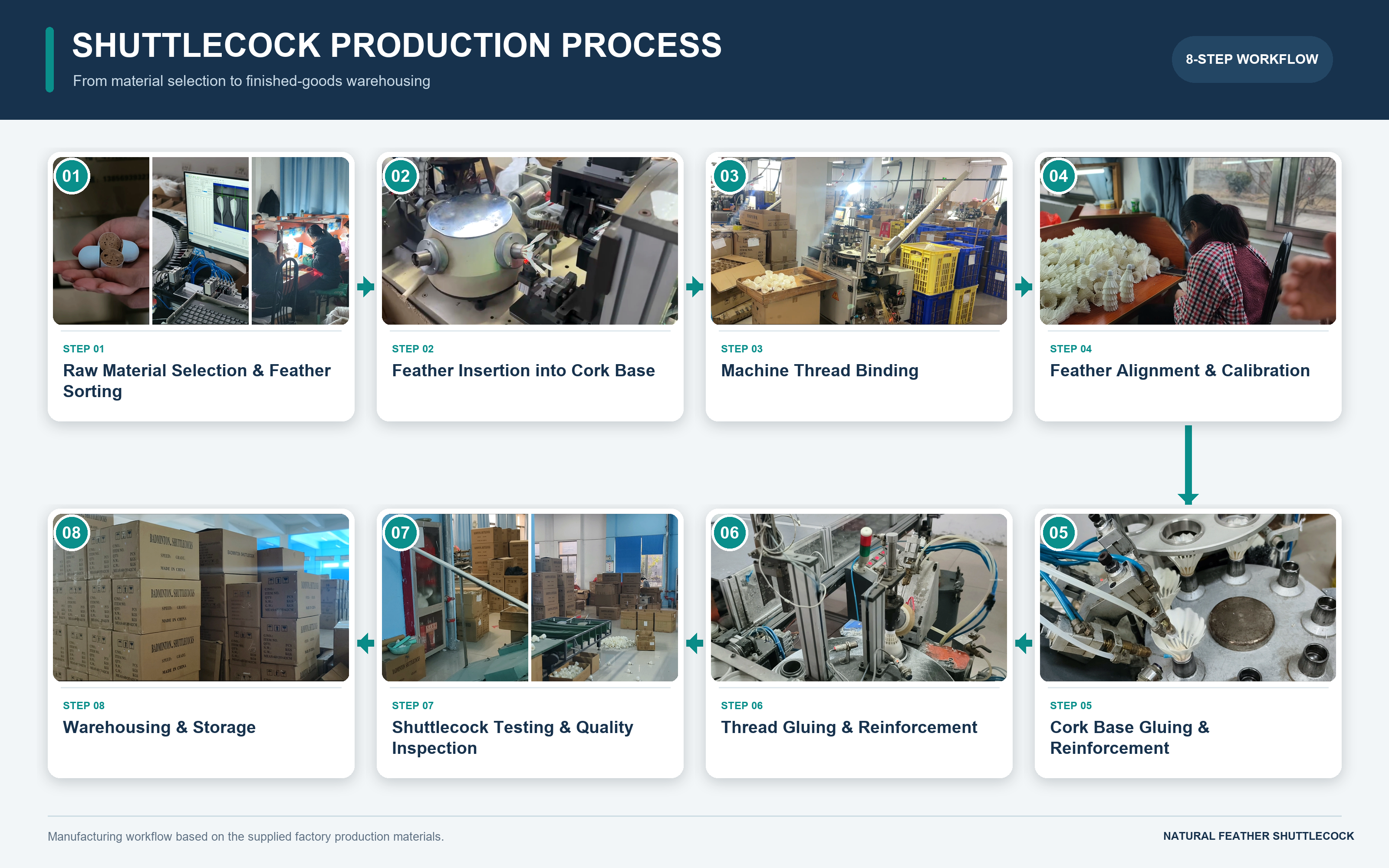
How to Private Label Badminton Shuttlecocks
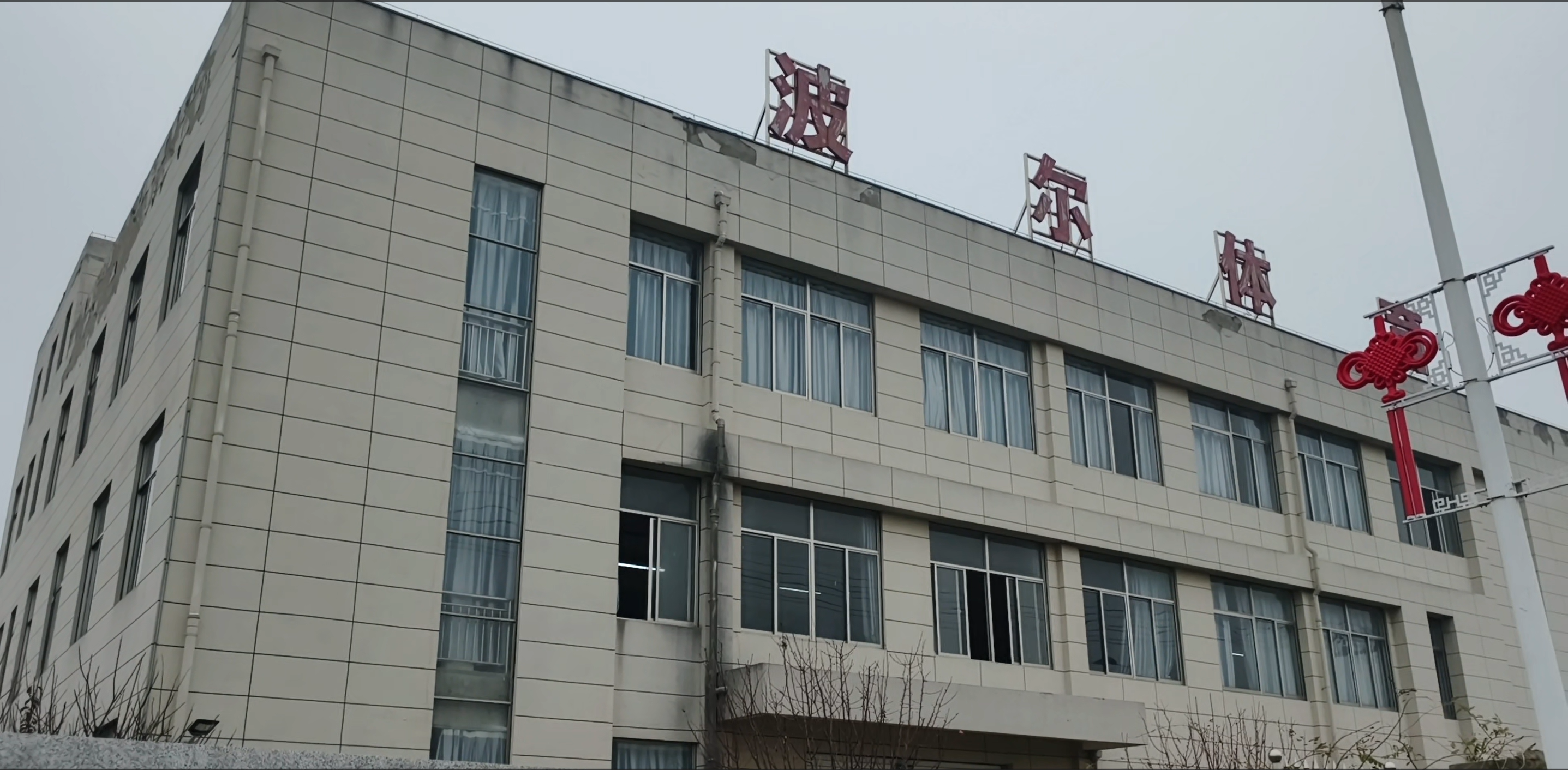
*Factory-building exterior supplied by the company. OEM capability, available materials, lead time and capacity should be confirmed against the approved sample and purchase contract.*
Private labeling a badminton shuttlecock involves more than printing a logo on a tube. The brand owner must define a product standard that can be sampled, approved, produced and inspected. Feather grade, cork construction, speed, flight, feel, packaging and claim handling all affect whether customers will reorder.
The strongest OEM projects begin with a use case and a controlled sample, not with artwork.
Step 1: Define your customer and price position
Specify whether the product is for:
- event or competition training;
- advanced club training;
- daily club and coaching use;
- schools and academies;
- amateur or recreational play;
- wholesale resale in an emerging market.
Then provide the current comparison product, target landed cost and expected annual volume. This helps the supplier propose an appropriate material structure.
Step 2: Build the product specification
Your OEM brief should include:
| Field | Example decision | |---|---| | Feather | Goose sword, goose straightened, Cigu duck full-round, duck large-square | | Head | Three-layer composite, double-layer composite or fiber-cork structure | | Speed | 75, 76, 77, 78, 79 or a market-specific mix | | Packaging | 12 pieces per tube, tube artwork and carton marks | | Target use | Club competition, regular training, school or retail | | Quality criteria | Flight, feel, durability, appearance and batch consistency |
Ask for the exact confirmed specification in the quotation or proforma invoice.
Step 3: Test samples before designing the final package
Test at least several pieces per model and speed. The current NDBOER/FeatherTrain catalogue recommends a minimum of six pieces per model per speed for samples. Record local indoor temperature, altitude if relevant, player level, flight stability, feel, damage and consumption.
Select one approved construction and retain its specification as the production reference. Do not approve solely from photographs.
Step 4: Prepare artwork correctly
Request the supplier’s tube, label and carton dielines. Artwork normally needs:
- brand name and logo;
- model or grade name;
- speed marking;
- quantity per tube;
- country-of-origin wording;
- importer details where legally required;
- barcode or SKU;
- carton marks;
- color references and print files.
Confirm who owns the artwork and check trademarks before printing. Never place an unauthorized major-brand logo on OEM goods.
Step 5: Confirm MOQ, cost and timing
The current catalogue lists:
- sample orders: no regular MOQ, minimum six pieces per model per speed;
- standard bulk orders: 100 tubes per model, with mixed speeds accepted subject to confirmation;
- OEM/custom label: minimum 200 tubes per design;
- standard packaging: 12 pieces per tube;
- general production lead time: 7-15 business days, subject to volume and season.
Customization, artwork approval, material availability and peak periods may extend timing. Freight and import cost must be quoted separately according to destination and trade term.
Step 6: Approve a pre-production sample
The approved sample should cover both product and packaging. Confirm:
- shuttle construction and speed;
- tube dimensions and artwork;
- logo position and print color;
- inner and outer packaging;
- carton labels;
- production quantity and speed breakdown;
- inspection standard.
Record changes in writing. A chat message saying “looks good” is not a complete specification.
Step 7: Inspect the production batch
Quality control should include material selection, appearance, assembly, speed/flight checks, packaging and pre-shipment verification. For a higher-risk first order, consider a third-party inspection with an agreed sampling plan.
Because natural feather is a biological material, minor variation may occur. The objective is controlled variation within the agreed product standard, not an unrealistic promise of identical pieces.
OEM, ODM and private label: what is the difference?
- Private label: an existing or lightly modified product sold under the buyer’s brand.
- OEM: production to the buyer’s confirmed specification and branding.
- ODM: the supplier contributes more product design or development.
The terms are sometimes used loosely, so define the actual work, files, materials, testing and ownership in writing.
Frequently asked questions
Can I print my logo on the cork?
Logo placement may be possible, but printing method, durability, artwork and MOQ must be confirmed with the specific supplier.
Can I customize feather grade and cork material?
Yes, within available production structures. Every change can affect feel, price, MOQ and consistency, so approve a new sample.
Can I order mixed speeds?
Mixed-speed bulk orders can be discussed. Provide the exact tube quantity for each model and speed so packing and carton allocation can be confirmed.
What information does the supplier need for a quotation?
Customer type, current reference product, model specification, speed mix, quantity, artwork requirement, destination and preferred trade term.
Start with the product, then build the brand
Use a mixed OEM evaluation pack to select the construction before paying for custom packaging. When the sample is approved, submit the specification and artwork requirements through request samples.
Need help choosing the right shuttlecock?
For model selection, sample testing, club supply, wholesale or OEM enquiries, contact our shuttlecock specialist directly.
WhatsApp: +86 199 5512 6120
BR-SHUTTLECOCK
Contact Expert
BOER No. 1 Competition Grade Goose Knife Feather Badminton Shuttlecock
Loading contacts…