Shuttlecock Guide
Best Value Shuttlecock for Badminton Club Training: A Cost-per-Session Buying Guide
Choose a club training shuttlecock by player level, usable durability, flight consistency and cost per session—not just tube price.
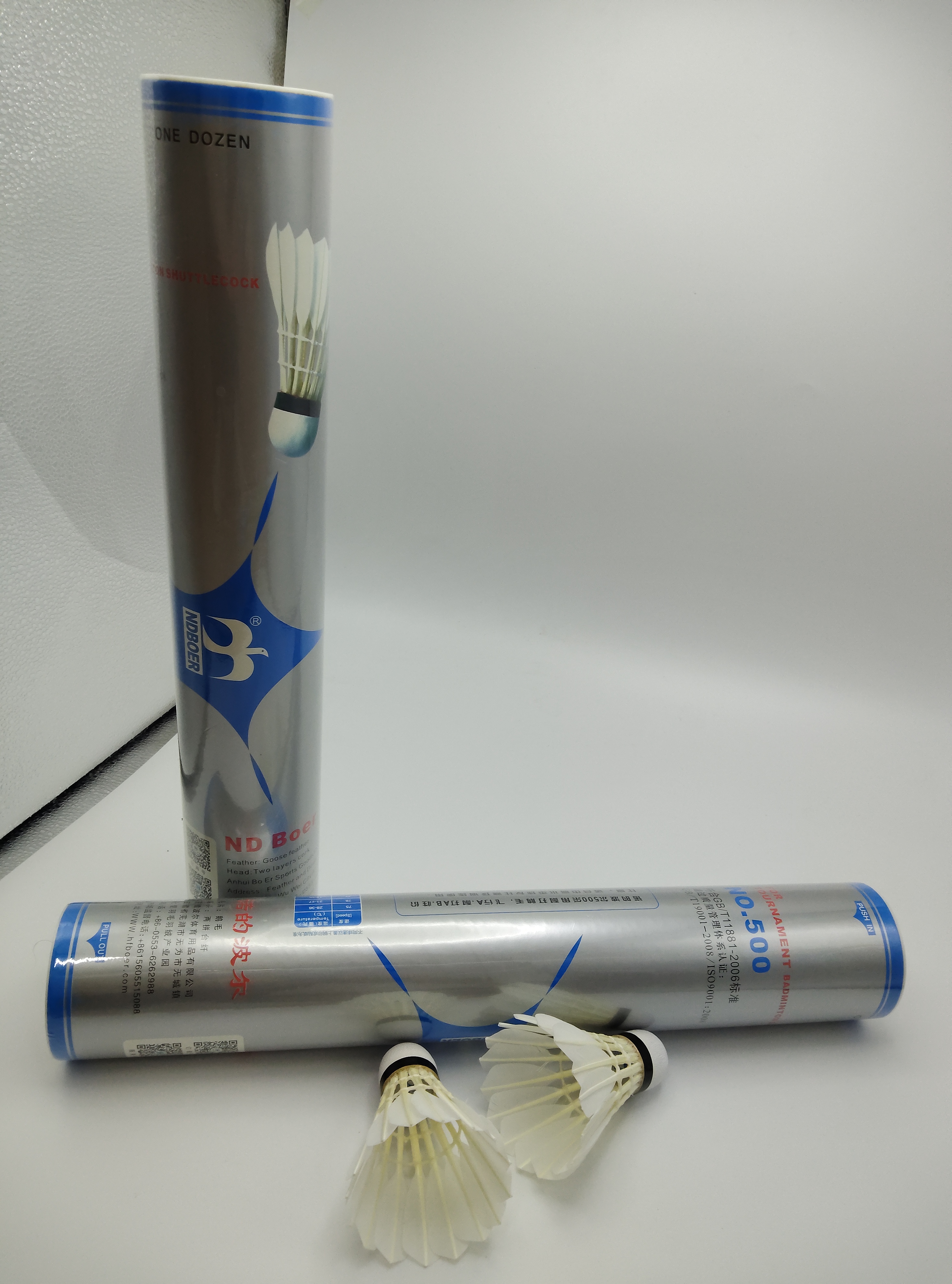
Best Value Shuttlecock for Badminton Club Training
The cheapest tube is rarely the best-value shuttlecock for a busy badminton club. Clubs consume shuttles repeatedly, so the decision affects monthly operating cost, player satisfaction and coaching quality. A low-priced shuttle that wobbles early or feels inconsistent can interrupt drills and increase consumption. A premium event-grade shuttle used for every beginner exercise can waste budget in the opposite direction.
The practical goal is to match shuttle grade to session purpose and measure cost per usable session.
Start with the club’s real use cases
Divide weekly court time into groups:
- advanced or competition training;
- regular adult club sessions;
- coaching and multi-shuttle drills;
- junior or school instruction;
- social and recreational play;
- internal matches or community events.
One product may not be efficient across all six. Many clubs control cost better with a two- or three-grade system.
A practical model ladder
Based on the supplied NDBOER/FeatherTrain catalogue:
| Training need | Starting model | Material position | Catalogue durability | |---|---|---|---:| | Event or elite training | BOER No.1 | Premium goose sword feather, full natural cork head | 9.5/10 | | Club competition | BOER No.2 | Premium goose sword feather, three-layer composite cork | 9/10 | | Regular advanced training | BOER No.3 | Preferred goose sword feather, double-/three-layer head | 8.5/10 | | Club teaching and schools | BOER No.500 | Goose straightened feather, double-layer fiber cork | 8/10 | | Higher-grade duck training | Star-Moon 100 | Mandarin duck full-round feather | 8.5/10 | | School and social play | BOER No.501/502 or Star-Moon 300 | Selected duck feather constructions | 7.5-8/10 |
These are supplier positioning figures, not guaranteed session life. Local testing remains necessary.
Measure cost in a way that helps decisions
Track these values for each model:
- tube purchase cost;
- freight and import cost per tube;
- number of shuttles opened per session;
- number retired for breakage;
- number retired for unstable flight;
- session duration and player level;
- hall temperature and unusual dryness.
Then calculate:
Landed cost per usable session = total landed shuttle cost ÷ completed sessions
Also record player acceptance. A shuttle that saves a small amount but causes constant complaints may not be the best operational choice.
Use different grades strategically
Advanced groups
Use a shuttle with stable trajectory and stronger feel so players can train timing, length and shot quality. BOER No.2 or No.3 can be tested here, with No.1 reserved for event preparation where appropriate.
Regular club play
A balanced model such as BOER No.3 or Star-Moon 100 can provide natural-feather response without using the top grade for every rally.
Teaching and high-volume drills
BOER No.500, No.501 or No.502 can be evaluated according to required feel and budget. Retired match shuttles may be reused for feeding drills only when their flight remains predictable enough for the exercise.
Consistency matters more than one excellent tube
Club managers should examine variation across pieces and tubes. Ask the supplier how it controls feather selection, insertion geometry, threading, adhesive, correction, speed and pre-shipment checks. Approve a sample standard before a repeat order and report any later issue with model, speed, carton or batch information.
Plan speed and inventory together
The same speed can perform differently when temperature or altitude changes. Speed 77 is commonly used around 21-28°C in the supplied guide, but adjacent speeds should be tested in local conditions. Clubs with seasonal changes may need two speeds during the year.
For reliable monthly supply, record:
- average tubes consumed per month;
- peak tournament or training periods;
- model and speed mix;
- reserve-stock target;
- expected delivery date and reorder point.
This is more useful than requesting a one-time lowest price.
A 30-day club test plan
Week 1: test at least two models at the current speed with advanced players.
Week 2: repeat with regular club groups and coaching drills.
Week 3: compare consumption, flight and complaints.
Week 4: select a primary model, a lower-cost drill model and, if needed, an event model.
The current sample programme recommends at least six pieces per model per speed. For a club comparison, the suggested pack includes BOER No.3, Star-Moon 100 and BOER No.500.
Frequently asked questions
Should a club buy goose or duck feather shuttlecocks?
It depends on the group. Goose sword-feather models are strong candidates for advanced and match-like training; selected duck feather models can control cost in regular, school and social sessions.
What is the best shuttlecock for high-volume training?
The best choice is the model with acceptable flight and feel at the lowest verified cost per session. Test BOER No.3, No.500 and a suitable duck feather model rather than relying on price alone.
How much stock should a club keep?
Use actual monthly consumption and supplier lead time. The current catalogue gives a general production lead time of 7-15 business days, subject to quantity, season and customization; transport time is separate.
Build a long-term club supply plan
Start with a club training sample pack. After testing, send model, speed, monthly consumption and destination through the request page to create a repeat-order plan.
Need help choosing the right shuttlecock?
For model selection, sample testing, club supply, wholesale or OEM enquiries, contact our shuttlecock specialist directly.
WhatsApp: +86 199 5512 6120
BR-SHUTTLECOCK
Contact Expert
BOER No. 1 Competition Grade Goose Knife Feather Badminton Shuttlecock
Loading contacts…